Tuesday, May 30, 2017

Hemophilia

Hemophilia is a genetically acquired trait, more common in males than females. Hemophilia is an x-linked/sex-linked trait. Hemophilia is a disease that can cause your blood to not have the clotting qualities of non-hemophiliacs. This makes everyday bumps, cuts, and scratches potentially life threatening. Hemophilia will cause a small cut that a normal person probably wont worry about, and will probably only bleed for a few minutes to become life threatening and could possibly cause the person to lose a lot of blood and possibly bleed out. Also if a normal person were to get hit in the stomach, they would probably be fine, but a person with hemophilia would most likely get internal bleeding and that causes a lot of problems.

http://hemophilia.aboutkidshealth.ca/en/Assets/Hemophilia_severity_MED_ILL_EN_72.jpg

Translation

Translation is when the RNA strand is translated into amino acids. This process occurs in the ribosome. The mRNA brings the RNA strand to the ribosome, then the tRNA goes out and gets the amino acids specified by the codon and then the ribosome bonds them together in poly-peptide chains.

http://www.news-medical.net/life-sciences/DNA-Translation.aspx

Friday, May 26, 2017

Color Blindness


Color Blindnes
  • 8Color blindness is usually inherited. 
  • Color blindness is the inability to distinguish the difference between the color red and green 
  • There is no cure for color blindness 
  • Color blindness is more common for males. 
  • Color blindness is self diagnosable. 

The term color blind can be a little misleading, to be color blind doesn't mean you just see black and white. It means you confuse colors such as red and green. There are three forms of color blindness  protan, deutan, and tritan defects. There are colored lenses and glasses that can help with color blindness. 8% of all men are color blind but if a man is color blind he won't pass it on to his son. 


causes of mutation

Causes of mutation  


Mutation occur to certain cells sometime in a persons life. It can be caused by your environment, such as ultraviolet radiation from sun rays. It can also occur if an mistake occurs while DNA copies itself for division. 

Saturday, May 20, 2017

Cystic Fibrosis

Cystic Fibrosis 

By: Julia Sipple 

Cystic Fibrosis is a autosomal recessive disease that causes build up of thick sticky mucus in the organs and lungs, progression of this can cause damage to the lungs and respiratory system. Symptoms can include coughing, repeated lung infections, and inability to gain weight. Treatments can help this disease but their is no known cure. 

Summary: This is a very dangerous respiratory disease, but treatments can help make it more manageable. There is no known cure. Something that fascinated me was people of all ages can have this diseases and have to live with it forever. 
https://en.wikipedia.org/wiki/Cystic_fibrosis

Abiogenesis

Abiogenesis 

By: Julia Sipple 

https://sites.google.com/site/jgeorge4th2014/home/part-3-unity-and-diversity-of-life/abiogenesisvsbiogenesis
Abiogenesis also known as spontaneous generation is the theory that nonliving things can produce life.  Abiogenesis theory has been proven wrong. 


Summary: Abiogenesis was the theory that life spontaneously showed up without reproduction. What surprised me is that people thought you didn't need reproduction for life to grow. 

Biogenesis

Biogenesis 

By: Julia Sipple 

http://creationwiki.org/Law_of_biogenesis
Biogenesis is the production of new living organisms. In biogenesis life can only form from preexisting life. The theory of biogenesis was proven by Louis Pasteur; his theory states that living things can only come from other living things by reproduction. Another experiment that was used to prove this theory was Redi's. Redi had two pieces of meat put into jars, he left one lid off and one lid on. The jar without the lid had flies on top that laid eggs and produced more fly's. The one with the lid had no flies and had no eggs therefor no reproduction of more flies. 


Summary: Life can only come from preexisting life. Living things cannot grow as a population without reproduction. Something I found interesting about biogenesis is we all had to come from some sort of preexisting life. 

Friday, May 19, 2017

Plasma Membrane

Cell Organelles: Plasma Membranes


Plasma membranes are often seen as the boundary between a cell and its environment. It regulates exactly what can go in and what could flow out of the cell. The Cell membrane is a prime example of homeostasis as it not only protects the cell and it's form, but regulates what enters and exits to maintain the comfortable density of a cell. It importantly serves as a protecter of the cell, think of it as a soldier guarding a castle, the soldier properly inspects every guest/visiter that enters or exits to make sure that the people and or things are safe to enter or go.

Structure: The plasma membranes are made up of phospholipids bilayers, these phospholipids are positioned parallel from one another. Phospholipids are simply made up of a macromolecule, the lipid or also known as "fatty acids", in which are attached to a phosphate group. These phospholipids (most commonly) make a circular formation, the tails of the phospholipids naturally hate water, given that their lipids, and when they form a circle together the heads align side by side whilst the two fatty acid tails interlock with the other aligned layer of phospholipids creating a sort of barrier.

This phospholipid bilayer is a semi-permeable structure, meaning it only lets certain molecules to diffuse through the cell.

Plasma Membranes also have three proteins that help give extra support to its function.
Transport Proteins : These help the cell transport molecules into/out-of the cell membrane through diffusion.
Glycoprotein : This protein helps transport some molecules but also is a factor in cell communications.
Receptor Proteins : This protein helps the communication of a cell with its outside environment, yes that sounds quite odd and you may be wondering "how can cells communicate?" well, these proteins use hormones, as well as neurotransmitters and other molecules to signal things/organisms from its outside environment to either stay away or that they're okay to enter.

Some important molecules are too big to enter the cell membrane due to the little space the phospholipids provide to pass through. This is the roll of the channel protein, it properly regulates what can exit/enter the cell, and is able to transport bigger molecules.

Components of Plasma Membrane

                What I've learned from this cell organelle, is that the cell membranes of prokaryotic cells and eukaryotic cells differ from one another, the prokaryotic plasma membrane is composed of phospholipids as explained above, and that they also have multiple plasma membranes, and the eukaryotic plasma membrane is less permeable and has bigger focus on the stabilization of the membrane.


Sources: http://biology.tutorvista.com/animal-and-plant-cells/plasma-membrane.html
http://aisdvs.aldine.k12.tx.us/pluginfile.php/283321/mod_book/chapter/38503/cell%20membrane%20structure.jpg

MLA FORMAT

"Cite A Website - Cite This For Me". Aisdvs.aldine.k12.tx.us. N.p., 2017. Web. 20 May 2017.
"Plasma Membrane | Structure, Function Of Plasma Membrane | Biology@Tutorvista.Com". Biology.tutorvista.com. N.p., 2017. Web. 20 May 2017.


Mutualism

Mutualism 

Mutualism is a type of Symbiosis. It is when two organisms benefit from each other and neither are harmed during the process. 


  • Examples: When an Egyptian plover feeds on the inside of an Crocodiles mouth (mainly in between the teeth), both of the organisms are gaining something. The croc is getting it's mouth cleaned while the plover is getting a meal. 

The use of Mutualism can be used in the world of biology and zoology. If you're trying to figure out how different animals interact with each other then you would find out that Mutualism is a type of relationship. There are some surprising relationships between animals as you learn more about Mutualism such as the Crocodile and the Egyptian plover also there is an example of a cowbird eating ticks off of a Rhino. This can be seen everyday and can Mutualism happen between all organisms if exotic or not. 

http://biochemicalsoul.com/2009/03/adaptation-of-the-week-birdcroc-symbiosis/

Genetics : Recessive Trait

Genetics : Recessive Trait
By : Sudhamsh


Genetics is the study of genes and alleles and how they are passed on. When we are dealing with regular [Mendelian] genetics, we would ONLY have 2 types of alleles : Dominant and recessive. The words themselves are self-explanatory, one is dominant over the other while the other being recessive. We will focus on the recessive gene because people sort of naturally believe that it is not as useful to learn about it. But, there are fascinating things about recessive which, I think, happened so much by chance. Otherwise, we would have all had a particular gene in EVERY single human.

Things to know : 
                     1) Recessive is always masked by dominant.
                2) Having a recessive trait is rare, considering 95% of the time it is masked by the dominant gene.
                     3) Represented by lower-case letters when working with regular genetics.
                     4) Recessive does NOT mean you don't have the disease/ trait [sometimes].
                     5) Dominant alleles are NOT better than recessive alleles.


Summary : As we saw in the 4th bullet point above, I said : Recessive does NOT mean you don't have the disease/ trait because some diseases only occur when there is a recessive allele present for it. Take for example : Color blindness, it is a recessive disease which ONLY happens when you have all recessive alleles to make the disease happen. Because in males, there is only 1 x-chromosome [neglecting the y because not much genetic info] and you only need one recessive allele to actually get the disease. So, they are more likely to get recessive diseases or to put it better : they are more likely to get diseases that are X-linked meaning they are linked to the 23rd chromosome pair. In the 5th bullet point, I said dominant is not better than recessive. Consider an example for this one, like say some rock pocket mice have dark fur, and some have light fur. The dark-fur allele is dominant, and the light-fur allele is recessive. When mice live in a habitat filled with dark rocks, dark fur is “better” because it makes the mice less visible to predators. But when mice live in a habitat filled with light rocks and sand, light fur is “better.” It’s the environment that matters, not whether the allele is dominant or recessive. So, it is important to understand what trait and allele is acting on which environment which changes how long they survive. Having a dominant trait when you don't need it is NOT good at all. But, having a recessive trait might just be perfect for that situation. So, just understand that recessive traits are not just being masked by dominant, but they hide a fascinating story behind them.


Source : http://learn.genetics.utah.edu/content/basics/patterns/
Mr. Black's Powerpoint[s]

DNA Function & Structure

                                                           DNA Function & Structure
                                                                  By:Khalilah Morris 


DNA is a molecule that contains the instructions an organism needs to develop, live and reproduce.These instructions are found inside every cell, and are passed down from parents to their children.

DNA is made up of molecules called nucleotides. Each nucleotide contains a phosphate group, a sugar group and a nitrogen base. The four types of nitrogen bases are adenine , thymine , guanine and cytosine . The order of these bases is what determines DNA's instructions, or genetic code. The order of nitrogen bases in a DNA sequence forms genes which in the cell, tells cells how to make proteins. Another type of nucleic acid, ribonucleic acid, or RNA, translates genetic information from DNA into proteins. 
https://www.slideshare.net/rozeka01/ths-general-biology-unit-4-heredity-dna-structure-and-function-notes
https://www.chegg.com/tutors/what-is-RNA-and-DNA-Structure-and-Function/
https://www.quora.com/What-are-3-functions-of-DNA


Anaerobic Energy Production

Anaerobic Energy Production

Anaerobic Energy Production is based on producing energy with no oxygen. It is not the most productive way of producing energy, but it works when you need it.

Main Points

* The most common form is lactic acid production.

* It usually occurs in exercise

* Is not the main form of energy production and is not the most efficient

Summary

This is the last ditch form of energy production and is not the most efficient. It usually occurs during exercise.

Wednesday, May 17, 2017

Sickle Cell Anemia


Sickle Cell Anemia 
By Joshua Miller

Sickle Cell Anemia is a blood disorder that results in abnormal red blood cells. The abnormality is found in the protein Hemoglobin, which carries oxygen. The disorder is called Sickle Cell Anemia because the blood cells can become rigid and shaped like a sickle. Symptoms include pain, swelling of hands and feet, frequent infections, and vision problems. It is treated with antibiotics, pain medications, and Hydroxyurea. Sickle Cell Anemia is inherited.  Two genes must be inherited  from the parents to get the disease. A person who gets a normal gene from one parents and a sickle cell gene from the other parent does not get the disease but instead has what is called "sickle cell trait." 

In conclusion, Sickle cell Anemia is a rare inherited blood disorder that can be treated with medication.


Friday, May 5, 2017

Incomplete Dominance

Incomplete Dominance
Incomplete Dominance is an example of Non-Mendelian genetics. It is when no single allele is dominant over the other. 

  • When there is Incomplete Dominance instead of both of the dominant alleles showing both of them mix creating a new color or trait. Ex: Black + White = Grey, Red + White = Pink, Red + Blue = Purple, etc.
  • Both of the alleles are capital
  • You would use primes which is " ' ". They would be used to tell the dominant alleles apart. Ex: RR', BB', WW', etc.

Mitosis

Mitosis

Mitosis is the replication of cells to create an identical copy. It is used when more cells are needed to replace damaged or lost cells. The process of mitosis stars in the nucleus. The chromosomes in the nucleus replicate and are then attached to each other by a little button called a centromere. The nucleus then dissolves leaving the chromatid pairs floating around in the cell. Then, all of the chromatids line up down the middle of the cell and the centrioles attach spindle fibers to them. The spindle fibers then break the centromeres and pull the chromatids apart. Once the chromosomes are pulled away from each other, the process of cytokinesis takes place, separating the cell into two identical cells. The nucleus then reforms and then the process is over. 

This whole process happens millions of times to replicate enough cells to replace the damaged or lost ones, and it all happens fairly quickly. I found it interesting that all of the DNA can be replicated so quickly, based on the amount of DNA in a cell, it would seem that this process would take a a long time.

Picture
http://creationwiki.org/Mitosis

Homeostasis-- Blake Noble


Homeostasis
By: Blake Noble

Homeostasis:
Homeostasis is a word derived from the greek words "homeo" meaning similar/same and "stasis" meaning stable/constant. Therefore Homeostasis is of maintaining a constant/stable internal environment.
• You can see this in plants, animals, human bodies, and even in tiny cells. 
• Homeostasis regulates many functions to make sure everything is balanced out including the internal temperature, the pH levels, hydration, blood pressure, sugars etc. 

Homeostasis has helped me to understand how the body
is able to adapt to changes we put them through to help
us remain healthy, like for example, if you've lived in 
South Africa all your life--your body is naturally used
to the heavy heat, and its comfortable to you because
its always been those conditions for you throughout 
your life, and lets say you move to Canada all of a 
sudden, your body wont be used to the frigid  
winters there, and for a while you will feel more
freezing than the others living there because you 
aren't as adapted to the cold like they are, and over
a period of time your body will adapt to the environment
that you've moved to and the winter doesn't become much
of a problem anymore. It's just fascinating how this one system
can keep things afloat, and adapt to different environments
to keep you healthy.


Source of Reference & Pictures: 
http://study.com/academy/lesson/homeostasis-and-temperature-regulation-in-humans.html 
https://blogger.googleusercontent.com/img/b/R29vZ2xl/AVvXsEhg5-LcDKKjkjeM5F4Tqu3cGqXjDQtgdmkh0SzcBzYRR8gc73Yt8D33bsMfWq_vG20FJQAYQUjFEkCaBtv53h_LlzXGXNSSma2eltaVax2qB4CFFxd4njz0mJz9i9DZiR5TK-DgKXrQhQ/s1600/thermoregulatory.png


Mitochondria

                                                        Cell Organelle - Mitochondria
                                                                             By Sudhamsh


Mitochondrion is an organelle that is found in cells that creates the energy so that cells can use them to survive and maintain stability of cellular activity. Most people confuse mitochondria with mitochondrion because mitochondrion is a single thing while mitochondria are multiple mitochondrion. You just have to understand that because it would not be good if you confuse them. Furthermore, it is a very essential organelle in the cell because of its uses.


Main ideas :


  • Found ONLY in eukaryotic cells.
  • Creates ATP using aerobic or anaerobic respiration. (Cellular Respiration)
  • The amounts of mitochondria in a cell depend on its use of energy need.
  • They have folds on their surface (called cristae) that increase the efficiency of ATP produced.
  • One of the few organelles that have double membranes. (Inner membrane and outer membrane)
  • Contain their own DNA (called Mitochondrial DNA)
  • Also contain ribosomes.


Summary : Mitochondrion is a vital organelle (little organ) because everybody considers it like a NEED for life. They create energy by breaking the bonds between phosphates and release energy for the cell's use. It starts when plants release oxygen and glucose and mitochondria grasp the products of the photosynthesis where they become the reactants of cellular respiration and the plants store the energy in chemical bonds and mitochondria breaks the bonds and when it breaks it, the energy is just given away to the cell. It is also regularly confused that mitochondria releases energy by storing it in bonds. But, that does not make the slightest sense of all. The actual thing is that it releases energy by BREAKING the bonds of glucose where the energy is stored. Another common misconception is that people think plants don't have mitochondria because they think plants don't have muscles and so on. But, plant cells DO have mitochondria and that is just like the way we have mitochondria (You can also see mitochondria of plant cells in the image above). In conclusion, Mitochondria are very crucial organelles that require for a cell's growth, activity and functioning.


Aerobic Energy Production

                                             Aerobic Energy Production
                                             By:Khalilah Morris 


  Aerobic Energy performs at a lower intensity level relies almost on the aerobic system for    energy production and requires the athlete to use oxygen as a source of energy.


                                                 Main idea:
Cells break down food in the mitochondria in a long, multistep process that produces roughly 36 ATP.The first stage of aerobic respiration is glycolysis,which takes place in the cytosol of cells and also occurs in fermentations and other forms of anaerobic respiration. 


                                                  Summary:

Within the human body aerobic are important to muscle function.Muscle cells specialized for aerobic respiration provide endurance and those specialized for lactic acid fermentation  support short but intense energy.  


citations:
http://www.ptdirect.com/training-design/anatomy-and-physiology/the-aerobic-system

http://www.lactate.com/triathlon/lactate_triathlon_anaerobic_energy.html

Nucleus

Nucleus

By: Dylan Murphy

The nucleus is the center of a cell, which controls all cell activities and also contains DNA. 
Nucleus contains all genetic material of the cell, and Its like the brain of the cell. The genetic material inside the cell is called a genome of the cell. Within the nucleus DNA in the chromosomes are duplicated before cell division and RNA is synthesized. It usually takes up about 10 percent of the cell's volume, and consists of the following main parts: Nucleolemma or nuclear membrane, Nuclear sap or karyolymph or nucleoplasm, Chromatin network or fibres, Nucleolus, and Endosomes. The nucleus is kinda like your mini brain, it controls all the little things that make up who you are. The nucleus was the first of the cell organelles to be discovered by scientists. Each human cell contains around 6 feet of DNA which is very packed and organized with proteins.


  • The nucleus has a double membrane (the nuclear envelope) around it.
  • The nuclear membrane has pores allowing the movement of substances through it.
  • The nuclear membrane joins up with the endoplasmic reticulum.
  • The nucleus contains chromosomes which are made of DNA and associated proteins called histones.
  • There may be at least one dark stained body called a nucleolus.
  • The nucleus contains genes that hold the information needed to make proteins.


Thursday, May 4, 2017

antibiotics

Antibiotics 

  • Antibiotics are medicines that fight bacterial infections. 
  • Antibiotics cannot fight infections caused by viruses such as colds, flu, most coughs and bronchitis and sore throats unless strep throat 
  • Never take an antibiotics if not prescribed because it can do more harm than good.
  • Side effects of antibiotics can be diarrhea and nausea and can make you more sensitive to sunlight.
  • Antibiotics kill most of the bacteria in your body that are sensitive to them, even the "good" bacteria that help your body.


Antibiotics used properly can save lives! Antibiotics kill bacteria or keep it from reproducing. You can use antibiotics for infections such as strep throat, a sinus infection, Pneumonia etc. The first antibiotic was penicillin. Penicillin was invented by Alexander Fleming. There are several types of modern antibiotics, and they are only available with a doctor's prescription in most countries.

Wednesday, May 3, 2017

Symbiotic Relationship: Parasitism


Symbiotic Relationship: Parasitism
By: Joshua Miller

Symbiosis is a long term relationship between two unlike organisms. In a symbiotic relationship, one or both of the species entirely depend of each other for their survival. In a parasitic relationship, one of the species is harmed while the other benefits. Parasites can live inside the host’s body which are called endoparasites or they can live on the host’s surface. These are called ectoparasites. Nectrotrophic parasites kill their host while Biotrotrophic parasites rely on their host surviving. At least half of all animals have had a parasite in their lifetime. Plants can also carry parasites. 

Some examples of parasites in humans are Tapeworms and Roundworm. Some examples of parasites on animals are ticks, fleas, and different internal parasitic worms. Some examples of parasites on plants include fungus and bugs like aphids. 


In conclusion, symbiotic parasitism is a non-mutual relationship between species, where one species (parasite) benefits at the expense of another species (the host). Endoparasites live inside the host’s body and ectoparasites live on the outside of the body. Although parasites harm their hosts, it is in the parasite's best interest not to kill the host, because it relies on the host's body to live. Parasites are smaller than their host organism and can reproduce quicker, causing more damage to the host. 

By: Joshua Miller


https://en.wikipedia.org/wiki/Symbiosis


Friday, April 14, 2017

Codominance

Codominance 
Codominance is a pattern in Non-Mendilian genetics. It is when no single allele is dominant over the other, both are present at the same time. 

  • There are two dominant alleles, neither allele over powers the other
  • Both alleles will be capital letters 
  • Alleles can be represented as primes or letters. Ex: Black fur on a cat and White fur on a cat. They are both dominant but you can choose the alleles as being BW or BB' 
  • Codominance shows a combination of both of the traits like spotted, stripped, checkered, etc.


Example Chart: 


Microscope Parts and Types

By: Elizabeth Cook


    The microscope is a tool that is used in a lab to view very small (microscopic) objects. There are many different types of microscopes, but they all have the same purpose.

    There are three different categories of microscopes, the electron, compound and the compound light microscope. The compound microscope is commonly used for about 10X magnification, and was invented by Zacharias Janssen. It has two systems of lenses: The ocular/eyepiece lens and the objective lens, which is closest to the object of magnification. The compound light microscope can magnify an object up to 1000X to 2000X the original size. This was also invented by Zacharias Janssen It works by using light to transmit the images to our eyes. The compound/compound light microscopes should always be carried by the base and the eyepiece(see picture below). The electron microscope is used for maximum magnification, which can go up to about 10,000,000X the original size. This microscope works by scanning a focused electron beam over a surface to create an image. The electrons then react with the object of magnification and produce the images. The electron microscope was invented by Ernst Ruska and Max Knoll. It is also much larger than the other microscope types.

    Microscopes are very useful in all labs and are a major key in new discovery. Without microscopes, we would not be able to view microscopic objects and we wouldn't know as much as we do about other organisms.

Citations: 
http://www.cas.miamioh.edu/mbi-ws/microscopes/compoundscope.html
http://www.explainthatstuff.com/electronmicroscopes.html
The Compound Microscope


The Electron Microscope

Thursday, April 13, 2017

Nitrogen Cycle


Nitrogen Cycle
By: Joshua Miller


The Nitrogen Cycle is when nitrogen moves between the atmosphere, biosphere, and geosphere in different forms.  It is a biogeochemical cycle by which nitrogen is converted into various chemical
forms as it circulates. The conversion of nitrogen can be carried out through both biological and physical processes.  Even though most of the air we breathe is N2, most of the nitrogen in the air is not available for use by organisms because it is relatively unreactive; whereas, organisms need reactive nitrogen to be able to bring it into cells.  For plants and animals to be able to use nitrogen, N2 gas is first converted to a more chemically available form   

There are five main processes that cycle nitrogen through the geosphere, atmosphere, and biosphere.  They are nitrogen fixation,  nitrogen uptake through organismal growth, nitrogen mineralization through decay, nitrification, and denitrification.    Microorganisms like bacteria play a major role in all of the main nitrogen transformations.  

Since atmospheric nitrogen has limited availability for biological use, usable nitrogen is scarce in many types of ecosystems.  Ecologists find the nitrogen cycle interesting because nitrogen availability can affect the rate of certain ecosystem processes such as decomposition.  The human activities of fossil fuel combustion, use of artificial nitrogen fertilizers, and the release of nitrogen in wastewater have dramatically altered the global nitrogen cycle.  


In summary, most nitrogen in the air cannot be used by organisms because it is unreactice.  For plants and animals to be able to use nitrogen, it must first be converted to a more chemically available form. I found it interesting, but I am not surprised, that human activities can affect the way the nitrogen cycle works.  


https://en.wikipedia.org/wiki/Nitrogen_cycle
http://www.visionlearning.com/en/library/Earth-Science/6/The-Nitrogen-Cycle/98

Chloroplast

                                                 Chloroplast
                                           By:Khalilah Morris

Chloroplast is the organelles that capture the energy from sunlight and convert it into chemical energy in a process called photosynthesis. It is the primary pigment in photosynthetic plants.


                                                       Main Idea:
Works to convert light energy of the sun into sugar that can be used by cells.The entire process is called photosynthesis and it all depends on the little green chlorophyll molecules in each chloroplast.A green pigment in chloroplasts called Chlorophyll absorbs the energy in sunlight.This energy is used to convert carbon dioxide and water into glucose and oxygen.

                                                          Summary:
Chloroplasts contain chlorophyll. This is a green pigment that absorbs light energy from the sun for photosynthesis. Photosynthesis occurs in two stages, the light reaction stage and the dark reaction stage. The chemical energy produced from this process is stored as sugar. Chloroplasts are plastids that develop in the cells of plant leaves. Plastids assist in the process of storing and later harvesting needed substances to produce energy. Chloroplasts contain the following structures: membrane envelope, thylakoid membrane and chlorophyll.


Citations: http://study.com/academy/lesson/what-is-granum-definition-function.html
http://www.biology4kids.com/files/cell_chloroplast.html-
https://www.slideshare.net/GregScrivin/chloroplast-

acid rain

•acid rain can also produce from volcanic eruptions.

•It cannot rot your skin.

•the acid in the rain can damage car paint.

•entire lakes have been declared dead due to acid rain.

Vacuoles

Cell Organelles: Vacuole

The vacuole is a membrane-bound organelle that exists in plant cells and animal cells. Their main function is to store waste and water. 

Main Points

  • They exist in both plant and animal cells.
  • Vacuoles can take up to 90% of a cell's volume, but at the very least 30%.
  • Their main function is process and store the waste products of the cell. 
  • The vacuole is membrane bound 
Summary

The vacuole is a waste faculty for water and any other waste products. It can take up most of the cell depending on how much waste is in the cell. The vacuole is very important because if it wasn't for the vacuole the cell would be consumed by waste and water. 


Citations
https://www.nature.com/subjects/vacuole
https://www.nature.com/scitable/topicpage/plant-cells-chloroplasts-and-cell-walls-14053956
http://bscb.org/learning-resources/softcell-e-learning/vacuole-plants/

Genetics Dominant Trait

Image result for what are dominant traits 


Genetics : Dominant Trait 

Jacey Robustelli

Genetics are the study of heredity. Most of your knowledge came from the work of Gregor Mendel. He was born in 1822. Mendel was a Monk and School teacher. He liked to Monastery garden. He became very interested in pea plants. In his studies he came up with different generations called P1 (First Parents), F1 (First Filial), F2 (Second Filial). The offspring of P1 were called the F1 generation and the offspring of F1 were called the F2 generation. 

In the P1 generation both alleles would always be homozygous. But how would you tell the difference. Well Mendel came up with dominant and recessive. If something was dominant one gene blocked out the other pair. When something is recessive it is the blocked gene. 

For example dark hair is a dominant trait for humans. If one parent has the gene for dark hair and the other has the gene for light hair the child will have dark hair. All of your traits are chosen by whether or not they are dominant or recessive. Because dominant is always going to overrule recessive.  

Source: https://www.education.com/science-fair/article/biology_it-takes/

ATP And Its Uses


ATP and its uses
By Sudhamsh

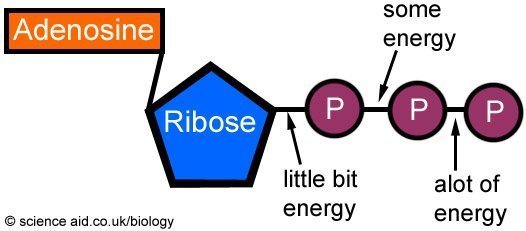
ATP stands for Adenosine Triphosphate. What you need to know from that is that it has 3 phosphates and they store energy. ATP is the high-energy molecule we need to do anything in our lives. ATP is the scientific term, but energy stands for the same thing.

Main ideas :
  1. Needed to function in any living body.
  2. It is a nucleotide.
  3. Energy stored in between the phosphates.
  4. Used for mostly ALL the processes that take place in a cell.
  5. Produced by cellular respiration in the mitochondria.
  6. They are found in plant and animal cells.

Summary : It is considered as the universal energy currency for life. It is not only good for storing energy. It also releases energy so the cells can make good use of it. This is done by enzymes breaking the chemical bonds in between the phosphates. When an enzymes break a single ATP molecule, what remains is ADP, which is one less phosphate. But, when that bond breaks, it is at the moment when energy is released for usage. One of the good things about ATP is that it allows for muscle contraction and movement and the amount of mitochondria in a cell depend on its usage so the ATP would not be wasted for a cell that doesn't need much energy. An important thing is to note that ATP is also created in plants because most people think that mitochondria doesn't necessarily exist in plants. So, do not get confused with that. Both plant AND animals have ATP synthesis. When a person runs a mile and he gasps for breath, and he tries to run again, his legs are sore. That is because more ATP (energy) is created when you have oxygen. But, since he was running, he could not get oxygen and could not create energy to run. In conclusion, ATP is an energy source that is ABSOLUTELY required for all cellular activities.

Sources : http://www2.sluh.org/bioweb/bi100/tutorials/respiration.htm
http://hyperphysics.phy-astr.gsu.edu/hbase/Biology/atp.html

Wednesday, April 12, 2017

Mutation Deletion

Mutation Deletion in DNA
By: Blake Noble

Deletion:
Deletion is a mutation in the chromosome sequence in DNA. Deletion happens when a molecule of DNA failed to be copied during the replication process. 

Nucleotides are units of DNA that consists of deoxyribose (a sugar), phosphate group, and a nitrogen base.

Each molecule in the DNA has two strands. For example, in the original DNA strand there is cytosine, and on the complementary strand, there is Guanine. These both will pair together just like how Adenine pairs with Thymine. These are called base pairs. ex) A always pairs with T, and G always pairs with C.  Same is applied in reverse.


An example of this mutation is depicted below. 


As you can see each pair then create codons of three that each code for a certain Amino Acid. In the mutation of deletion, if one and/or more of the molecules (as stated before) fails to be paired in the replication process, it could potentially throw off the rest of the process and cause severe diseases. 


Sunday, April 9, 2017

Blogger Information

Hey Everyone! Here is the information for your quarter long project that you will be working on.

Quarter Project


Throughout the remainder of the semester you will be updating blog posts and commenting on classmates blogs with questions. The goal of this assignment is to research areas of the curriculum and create interactive reviews that can then be used as a study guide before the EOC. It is the responsibility of the owner to monitor their blog and answer any questions posted by classmates.


Everyone will make three blog posts and comment on 3 other students posts per each blog due date totaling 9 comments/questions (meaning you cannot comment on the first 9 blogs and be done for the semester). In total you will make 3 blogs with 9 comments. Each blog should contain a visual (picture, video, animation), main ideas/information about your topic (Something you can use as a quick review before the EOC), and some type of reflection (a summary of what you learned, what surprised you, was this something you already knew about, how did you like this objective, how can it be applied outside of biology, ect). Go to the following link to sign up for your topics: https://docs.google.com/document/d/1egOHY4ggEfTNKogGEqr7_H8Gssy9l299oGCDD9cP9dU/edit?usp=sharing. All topics must be picked once before a second person can sign up for them. I have put some notes in parenthesis by a few topics to help narrow the topic. MAKE SURE YOU PUT YOUR NAME IN YOUR BLOG AND THE COMMENT SO I CAN GIVE YOU CREDIT FOR THE ASSIGNMENT.


Your blog post might be due before we cover the content objective in class. If your objective has not been covered you will need to do some research on your own, but always know I will be available to help guide and narrow your research if needed.


DO NOT contact me the day before your post is due asking for help narrowing your research. You have plenty of time so plan ahead.


The first blog will be due by MIDNIGHT Friday April 14th.
-All questions must be asked by MIDNIGHT Friday April 28th.
The second blog will be due by MIDNIGHT Friday May 5th.
-All questions must be asked by MIDNIGHT Friday May 12th.
The third blog will be due by MIDNIGHT Friday May 19th.
-All questions must be asked MIDNIGHT Friday May 26th.